
Download
Journal of Kidney Cancer
and VHL 2014; 1(3):26-39. Doi: http://dx.doi.org/10.15586/jkcvhl.2014.11
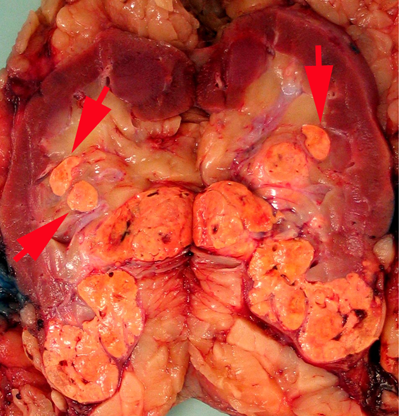
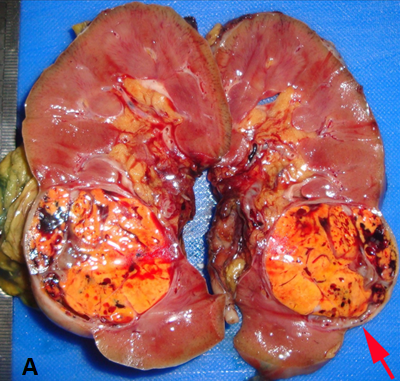
Figure 1A. Rounded nodules in the renal sinus indicate sinus vascular involvement.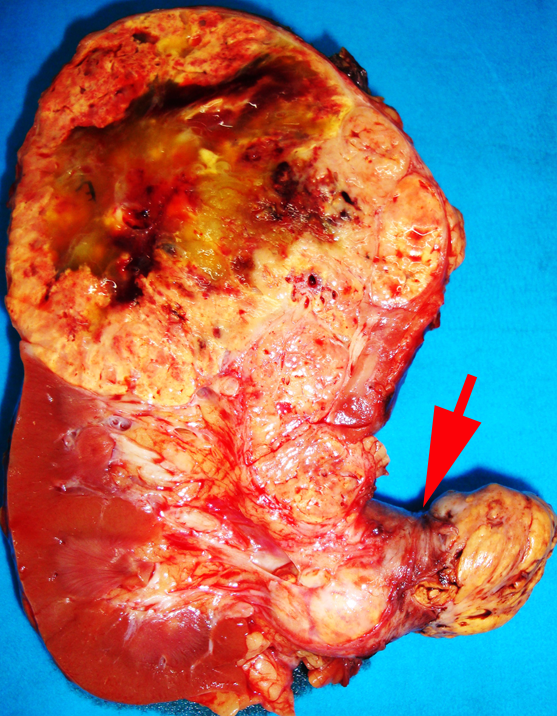
Since a kidney removed for neoplastic disease may also have concurrent non-neoplastic renal pathology including glomerular, tubulointerstitial and vascular disease, it was recommended that normal parenchyma with tumor, and normal parenchyma distant from the tumor be sampled.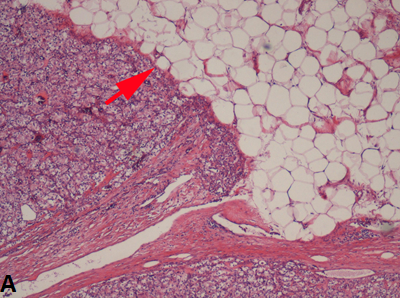
Venous invasion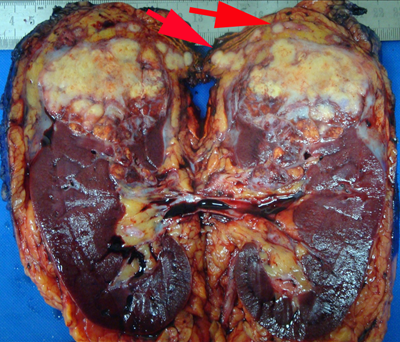
Renal tumor classification (ISUP Vancouver classification of renal neoplasia)
Review Article
The ISUP system of staging, grading and classification of renal cell neoplasia
Hemamali Samaratunga1,2, Troy Gianduzzo2,3, Brett Delahunt4
1Aquesta Pathology, Brisbane, Queensland, Australia; 2University of Queensland, Brisbane, Queensland, Australia, 3Wesley Hospital, Brisbane, Queensland, Australia; 4Department of Pathology and Molecular Medicine, Wellington School of Medicine and Health Sciences, University of Otago, Wellington, New Zealand
Abstract
Received: 04 July 2014; Accepted after revision: 17 July 2014;
Published 20 July 2014
Author
for correspondence: Associate Professor Hemamali Samaratunga, Aquesta Pathology,
21 Lissner Street, Toowong QLD 4066, Australia.
E-mail: [email protected]
Introduction
Staging of renal cell cancer is one of
the most important predictors of prognosis and among staging criteria it has
recently been recognized that renal sinus invasion is the most common route of
extra-renal spread (6, 7). Bonsib et al. (8) showed > 90% of clear cell
renal cell carcinoma (RCC) ≥ 7cm in
diameter to have invaded the renal sinus.
In a further study, Thompson et al. (9) examined additional tissue from
nephrectomy specimens from patients with pT1 disease who had died of RCC. Renal sinus invasion was found in 14 (42%) of
these cases and they compared these findings with a matched set of 33 patients
who had not died of RCC. In this latter group renal sinus invasion was seen in
only 2 (6%) of cases. Appropriate sampling of a kidney tumor, including
adequate sampling of the renal sinus has been shown to be extremely important
for the correct staging of kidney tumors (8, 10). In addition to recognizing
this, the 7th edition of the TNM staging system of the International
Union Against Cancer/American Joint Commission on Cancer/ (UICC/AJCC)
introduced several changes to the staging system of RCC (11, 12). In parallel
with this renal tumor classification has undergone major changes in the last
three decades, with novel morphotypes being added to successive classification
systems (13-15). Also during this time several
grading systems for RCC have been proposed, of which the Fuhrman grading system
had achieved most popularity (16). In recent years, the value of this system
has been questioned, not only with regards to its applicability in practice,
but also with regards to its value as a prognostic marker (17- 19).
In order to address these issues the
International Society of Urological pathology (ISUP), convened a consensus
conference to produce guidelines and made recommendations regarding the handling/sampling
and staging, classification and grading, of adult kidney RCC based on current
practice and evidence from the literature (20-24). Here we present a summary
the results of this ISUP consensus meeting.
Handling and staging of
RCC
Appropriate handling is clearly the
first step toward accurate diagnosis and staging of RCC and these issues were
considered by an expert group convened prior to the conference. After
deliberation by conference delegates, it was recommended that the initial
sampling section should be along the long axis of the kidney. It was considered
that this could be in the mid lateral plane of the kidney or through the
collecting system or vascular system. It was agreed that the optimal method to
identify renal sinus venous invasion is to open the kidney along probes placed
in large venous channels. It was further agreed that margin involvement should
be assessed by inking suspicious areas, the perinephric fat margin and hilum of
radical nephrectomy specimens or the renal parenchymal resection margin and
perinephric margin of partial nephrectomy specimens. At present there is no
information in the literature as to how best demonstrate perinephric fat
invasion and it was agreed that the fat overlying the tumor should be kept
intact, with multiple perpendicular cuts made, with a view to sampling
suspicious areas.
Tumor measurements
Tumor size is an important determinant of the UICC/AJCC TNM pathologic stage (11, 12) and correlates with perinephric fat extension, renal sinus invasion, prognosis and metastatic potential. There are several confounding factors in the estimation of tumor size. Retrograde venous invasion, renal vein and vena cava tumor, which can invade through the venous wall to achieve confluence, can cause problems with tumor size measurements. There is currently no guidance in the literature as to how size should be measured and whether or not a renal vein thrombus should be included in the measurement of the main tumor mass. It was agreed that after bivalving the kidney, multiple further sections (usually perpendicular) should be examined to ascertain the maximum tumor dimension. Although areas of contiguous involvement of perinephric fat and renal sinus tissue should be included in the tumor measurement, satellite nodules should not. There was consensus that the tumor measurements should not include a renal vein or caval thrombus.
In cases with multiple tumors, there was near consensus (survey 62%) that all tumors up to some designated maximum (eg. 5) should be measured, with fewer participants in favour of providing a measurement for the largest two tumors, as well as a range for all other tumors present.
Gross examination for
lymph nodes
Sampling tumor
Previous sampling recommendations have
been to take at least one block/cm of greatest dimension of tumor (26, 28).
Areas of different appearance or consistency and blocks to demonstrate tumor
relationship with peri-renal fat, renal sinus, renal pelvis and adrenal gland
should also be taken. There was consensus that sampling should follow this
general guideline of sampling with a minimum of three blocks. Multiple tumors
are commonly found in hereditary syndromes such as von Hippel-Lindau disease,
hereditary papillary RCC, Tuberous sclerosis and Birt-Hogg-Dube syndrome (29-31).
Multiple tumors also occur with oncocytosis, acquired cystic kidney disease and
with papillary RCC (32, 33). Multifocality in sporadic RCC is rare. It is
extremely uncommon to have >5 tumors in one kidney and in such instances
sampling issues are not addressed in the literature. There was consensus that
in cases with multiple tumors, sampling should include the 5 largest tumors at
a minimum.
Sampling the renal
sinus
Figure 1A. Rounded nodules in the renal sinus indicate sinus vascular involvement.
Sinus fat invasion occurs when
intravenous tumor invades through the media (33), however, in some cases tumor
bulging into the sinus can be difficult to interpret. Recommendations for sampling
have varied with protocols ranging from sampling of the entire interface to 2-3
blocks (6, 7, 34, 35). At the meeting there was consensus that when invasion of
the renal sinus is uncertain, at least three blocks of the interface should be
taken. If invasion is grossly evident or obviously not present (small
peripheral tumor) only 1 block is needed to confirm the gross impression.
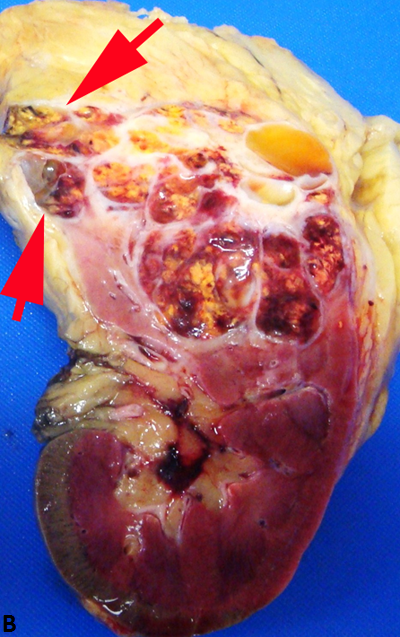
Figure 1B.
Tumor grossly involving the renal vein is usually visible to the naked eye. A
tumor thrombus typically expands the renal vein. The renal vein margin (arrow) often
retracts back from the tumor thrombus when vein clamps are removed.
Tumor invading into the vena cava wall has prognostic significance (35). In the 7th edition of the UICC/AJCC staging classification, tumor extending into the vena cava above the diaphragm or invading vena cava wall is classified as pT3c. In cases where a caval thrombus is present below the diaphragm, identification of invasion of the caval wall alters the staging category from pT3b to pT3c (12), thus impacting adversely on prognosis. It is therefore mandatory that adequate sections be examined, so as not to overlook this. When a specimen is submitted separately as a “caval thrombus” there was consensus that two or more sections must be taken to look for presence of tumor invading the caval wall.
Since a kidney removed for neoplastic disease may also have concurrent non-neoplastic renal pathology including glomerular, tubulointerstitial and vascular disease, it was recommended that normal parenchyma with tumor, and normal parenchyma distant from the tumor be sampled.
Renal sinus invasion
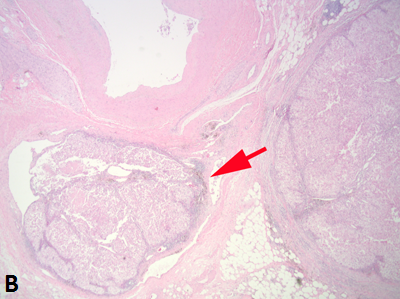
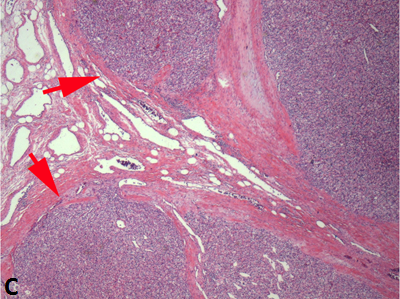
Figure 2.
A, Carcinoma in contact with renal sinus fat indicates renal sinus invasion; B, Carcinoma within vascular channels within the renal sinus, regardless of size
is also considered renal sinus invasion.
Perinephric fat
invasion
Figure 3.
A, If the outer surface of the tumor is smooth and convex, even if tumour
protrudes well into the perinephric fat, it is not considered perinephric
invasion. B, When RCC
invades through the renal capsule into the perinephric fat, there is loss of
the smooth convex outer contour, with nodules or irregular tumor masses
protruding into the perinephric fat. C, Tumor
extending as irregular tongues into perinephric tissues with or without
desmoplasia is considered perinephric fat invasion.
Venous invasion
Adrenal gland
involvement
In the current UICC/AJCC TNM staging
classification (11), direct invasion of the adrenal gland is considered to be pT4
disease. This is a significant change from the 2002 UICC/AJCC TNM
classification, in which adrenal gland invasion was considered to be pT3
disease. This change is based on reports that adrenal gland involvement has a
significantly worse prognosis than that of perinephric fat invasion (36, 37).
In view of this the adrenal gland should be carefully examined to assess
whether it is involved by carcinoma, and if so, whether this is by direct
invasion (pT4) or metastatic spread needs to be assessed (Fig. 4).
Figure 4. When the
adrenal gland is involved it must be established whether it is direct invasion
(pT4) or metastatic spread (pM1). In this example, both appear to be present.
Renal tumor classification (ISUP Vancouver classification of renal neoplasia)
There were a number of recommendations
with regards to modifications to the 2004 World Health Organization (WHO)
classification of renal tumors. Five distinct and novel epithelial malignancies
were added to the classification. These are tubulocystic RCC (38), acquired
cystic disease-associated RCC (39), clear cell (tubulo) papillary RCC (40),
microphthalmia transcription factor family (MiTF) translocation RCC (41) and
hereditary leiomyomatosis RCC syndrome-associated RCC (42). There was agreement
that, as reports of most of these new entities contained too few cases to
enable prognostication; this should not be formulated at this time. An
exception to this was clear-cell (tubulo) papillary RCC which was considered to
be a low-grade malignancy with a very favorable prognosis.
The position of succinate dehydrogenase
B deficiency-associated RCC (43) ALK translocation associated RCC (43, 44) and
thyroid-like follicular RCC (45) in the new classification was considered. It
was agreed that, while these entities was sufficiently well defined to enable
identification, further reports were necessary to permit a clear understanding
of the nature and behavior of these tumors. As such these tumors were
considered emerging or provisional new entities and were not included in the
Vancouver classification.
New concepts relating to recognized
tumors included considering multicystic clear cell RCC as a neoplasm of low
malignant potential as to date it has shown to have a universally favourable
outcome (46). It was agreed that subtyping of papillary RCC (type 1, type 2 and
other) was of value, however, oncocytic papillary RCC was not accepted as a
distinctive entity in the new classification. Hybrid oncocytic chromophobe
tumor (HOCT) was, for the time being, included as a subtype in the category of
chromophobe RCC (47, 48). HOCT is an
apparently indolent tumor that occurs in 3 distinct clinical settings: Birt-
Hogg- Dube syndrome, renal oncocytosis and sporadic neoplasm.
Advances in our understanding of the behavior
of angiomyolipomas, including epithelioid and cystic variants, were discussed.
It was agreed that epithelioid angiomyolipoma should be classified according to
presence or absence of atypia, as this would more accurately predict outcome of
these tumors than the recognition of the presence of an epithelioid morphology
without further qualification.
The relationship between cystic
nephroma and mixed epithelial stromal tumor of kidney was discussed with a
consensus that these tumors represent the same spectrum of neoplasia. Finally, synovial sarcoma was removed from
the mixed epithelial and mesenchymal category and placed within the sarcoma
group. The new classification agreed to at the meeting should be cited as the
International Society of Urological Pathology Vancouver Classification of Renal
Neoplasia.
ISUP Grading
Classification
There have been numerous grading systems for RCC, of which the Fuhrman grading system has achieved most popularity in clinical practice. (16, 49-51). Despite this, the value of this system in assessment of prognosis has been questioned (17, 19). Several studies have found that the Fuhrman grading system has prognostic significance only when the data are grouped (e.g. grade 1+ grade 2 versus grade 3+ grade 4), which effectively reduces the grading system to a 2 tier system. These results are somewhat similar to Fuhrman’s original report in which grade 2 and grade 3 tumors were found to have similar survival with combined grades 2 and 3 tumors, differing significantly in outcome from grade 1 and grade 4 tumors. This reduces the value of this system as the majority of RCC fall within the 2 central grading categories. Another problem is that Fuhrman’s validating study was based on a mixed series of RCC, which introduced an uncontrolled variable in the outcome studies based upon these data.
The application of the Fuhrman grading
system in practice is complicated as there are three separate parameters within
each grade, and involves the simultaneous assessment of nuclear size, nuclear
shape and nucleolar prominence. There are no directions as to how these
parameters should be stratified if they individually provide conflicting
information. It is not surprising that this grading system has been shown to
have poor to moderate inter-observer reproducibility and this is likely to be
due to the subjective nature of the grading process (17). To compensate for
this, many pathologists using the Fuhrman grading system have utilized
nucleolar grade alone, which is not the recommendation of the Fuhrman grading system.
There was also agreement that the presence of rhabdoid or sarcomatoid morphology within any of the morphotypes of renal cell carcinoma represents a form of tumor dedifferentiation. The prognosis of these tumors is similar to that associated with presence of extreme nuclear pleomorphism or tumor giant cells (56, 57). These combined observations were incorporated into a novel grading classification for renal cell carcinoma to be known as ISUP Grading Classification for renal cell carcinoma. (Table 1) (58).
Table 1. The International Society of Urological Pathology grading classification for renal cell carcinoma (58, 60)
|
|
|
|
Grade 2 |
|
|
|
|
|
|
|
In this classification, grades 1-3 were
based on nucleolar prominence, while grade 4 was defined as tumors with highly
pleomorphic tumor giant cells or the presence of sarcomatoid and/or rhabdoid
morphology. There was consensus that this classification is recommended for
papillary and clear cell renal cell carcinoma. It was also agreed that as no
current grading system provided independent prognostic information for
chromophobe RCC (59). These tumors
should not be graded. In addition to its role as a component of grading, it was
agreed that sarcomatoid differentiation should be reported separately. As a
minimum percentage was not a requirement for diagnostic purposes it was
concluded that it was not necessary to report the percentage of sarcomatoid
differentiation within individual tumors. Similarly for tumors with rhabdoid
morphology, it was agreed that it was unnecessary to report the percentage of
rhabdoid tumor present. For both of these dedifferentiation patterns it is,
however; necessary to report the underlying primary morphotype. In cases where
no primary tumor morphotype is apparent, these should be reported as
undifferentiated carcinoma with a sarcomatoid/rhabdoid component.
In addition to tumor grading, numerous
prognostic factors have been investigated for RCC. Prognostic parameters that,
according to the consensus conference, should be routinely reported
are tumor necrosis and tumor morphotype (22). Tumor necrosis was considered to
be of prognostic significance and it was agreed that assessment of this should
be based on both macroscopic and microscopic examination. It was recommended
that for clear cell RCC, the amount of necrosis should be recorded as a
percentage of the sampled tumor. There was agreement that the main tumor
morphotypes of RCC were of prognostic significance (60). In particular it was
noted that clear cell RCC, stage for stage, has a worse outcome than either
chromophobe or papillary RCC. There was also consensus that the subtyping of
papillary renal cell carcinoma into types 1 and 2 provides prognostic
information. Given that there is no conclusive evidence as to the significance
of intra-tumoral microvascular invasion as a prognostic parameter, there was
consensus that at present, this should not be considered as a potential staging
criterion.
Conclusion
In keeping with advances in knowledge
of renal neoplasia, staging, classification and grading of RCC have undergone
major changes in recent times. To reflect this, the ISUP undertook a review of
adult renal neoplasia through an international consensus conference in
Vancouver in 2012. This review summarizes the guidelines and recommendations
from this conference regarding handling/sampling, staging, classification and
grading, of kidney tumors. It is hoped that such advances in classification
will enable pathologists to follow uniformity in reporting of this highly
heterogeneous disease.
References
1. Siegel R, Naishadham D, Jemal A. Cancer
statistics, CA Cancer J Clin. 2013; 63: 11-30.
DOI: http://dx.doi.org/10.3322/caac.21166
2. Luke C, Sargent N, Pittman K, Price T, Roder D.
Epidemiology of cancers of the kidney in an Australian population. Asian Pac J
Cancer Prev. 2011; 12:2893-2899. PMid: 22393960
3. Motzer RJ, Porta C, Vogelzang NJ, Sternberg CN,
Szczylik C, Zolnierek J, Kollmannsberger C, Rha SY, Bjarnason GA, Melichar B,
De Giorgi U, Gr�nwald V, Davis ID, Lee JL, Esteban E, Urbanowitz G, Cai C,
Squires M, Marker M, Shi MM, Escudier B. Dovitinib versus sorafenib for
third-line targeted treatment of patients with metastatic renal cell carcinoma:
an open-label, randomised phase 3 trial. Lancet Oncol. 2014; 15:286-296.
DOI: http://dx.doi.org/10.1016/S1470-2045(14)70030-0
4. Hutson TE, Escudier B, Esteban E, Bjarnason GA,
Lim HY, Pittman KB, Senico P, Niethammer A, Lu DR, Hariharan S, Motzer RJ.
Randomized phase III trial of temsirolimus versus sorafenib as second-line
therapy after sunitinib in patients with metastatic renal cell carcinoma. J Clin
Oncol. 2014; 10; 32:760-767.
DOI: http://dx.doi.org/10.1200/JCO.2013.50.3961
5. Molina AM, Hutson TE, Larkin J, Gold AM, Wood K,
Carter D, Motzer R, Michaelson MD. A phase 1b clinical trial of the
multi-targeted tyrosine kinase inhibitor lenvatinib (E7080) in combination with
everolimus for treatment of metastatic renal cell carcinoma (RCC). Cancer
Chemother Pharmacol. 2014; 73:181-189.
DOI: http://dx.doi.org/10.1007/s00280-013-2339-y
6. Bonsib SM, Gibson D, Mhoon M, Greene GF. Renal
sinus involvement in renal cell carcinomas. Am J Surg Pathol. 2000; 24:451-458.
DOI: http://dx.doi.org/10.1097/00000478-200003000-00015
7. Bonsib SM. The renal sinus is the principal
invasive pathway: a prospective study of 100 renal cell carcinomas. Am J Surg
Pathol. 2004; 28:1594-1600.
DOI: http://dx.doi.org/10.1097/00000478-200412000-00007
8. Bonsib SM. T2 clear cell renal cell carcinoma is a
rare entity: a study of 120 clear cell renal cell carcinomas. J Urol. 2005;
174:1199-1202.
DOI: http://dx.doi.org/10.1097/01.ju.0000173631.01329.1f
9. Thompson RH, Blute ML, Krambeck AE, Lohse CM,
Magera JS, Leibovich BC, Kwon ED, Frank I, Cheville JC. Patients with pT1 renal
cell carcinoma who die from disease after nephrectomy may have unrecognized
renal sinus fat invasion. Am J Surg Pathol. 2007; 31: 1089-1093.
DOI: http://dx.doi.org/10.1097/PAS.0b013e31802fb4af
10. Bonsib SM. Macroscopic assessment, dissection
protocols and histologic sampling strategy for renal cell carcinomas. Diagn Histopathol.
2008; 14:151-156.
DOI: http://dx.doi.org/10.1016/j.mpdhp.2008.02.006
11. Sobin LH, Compton CC. TNM seventh edition: What's
new, what's changed: communication from the International Union Against Cancer
and the American Joint Committee on Cancer. Cancer 2010; 116:5336–5339.
DOI: http://dx.doi.org/10.1002/cncr.25537
12. Edge SB, Byrd DR, Carducci M, et al. AJCC Cancer
Staging Manual. 7th ed. New York, NY: Springer; 2009.
13. Mostofi FK. International Histological
Classification of Tumors No. 25: Histological Typing of Kidney Tumors. Geneva
cortisone Word Health Organization; 1981.
14. Kovacs G, Akhtar M, Beckwith BJ, Bugert P, Cooper
CS, Delahunt B, Eble JN, Fleming S, Ljungberg B, Medeiros LJ, Moch H, Reuter
VE, Ritz E, Roos G, Schmidt D, Srigley JR, St�rkel S, van den Berg E, Zbar B.
The Heidelberg classification of renal cell tumours. J Pathol. 1997;
183:131-133.
DOI: http://dx.doi.org/10.1002/(SICI)1096-9896(199710)183:2<131::AID-PATH931>3.0.CO;2-G
15. Eble JN, Sauter G, Epstein JI, Sesterhenn IA.
Pathology and Genetics of Tumours of the Urinary System and Male Genital
Organs. World Health Organization Classification of Tumours. Lyon: IARC Press,
2004.
DOI: http://dx.doi.org/10.1097/00000478-198210000-00007 PMid:7180965
17. Delahunt B. Advances and controversies in grading
and staging of renal cell carcinoma. Mod Pathol. 2009 Jun; 22 Suppl 2:S24-36.
DOI: http://dx.doi.org/10.1038/modpathol.2008.183
18. Goldstein NS. Grading of renal cell carcinoma.
Urol Clin North Am. 1999; 26:637-642.
DOI: http://dx.doi.org/10.1016/S0094-0143(05)70204-4
19. Ficarra V, Martignoni G, Maffei N, Brunelli M,
Novara G, Zanolla L, Pea M, Artibani W. Original and reviewed nuclear grade
according to the Fuhrman system : a multivariate analysis of 388 patients with
conventional renal cell carcinoma. Cancer 2005; 103:68-75.
DOI: http://dx.doi.org/10.1002/cncr.20749 PMid:15573369
20. Delahunt B, Egevad L, Montironi R, Srigley JR.
International Society of Urological Pathology (ISUP) consensus conference on
renal neoplasia: rationale and organization. Am J Surg Pathol. 2013;
37:1463-1468.
21. Srigley JR, Delahunt B, Eble JN, Egevad L, Epstein
JI, Grignon D, Hes O, Moch H, Montironi R, Tickoo SK, Zhou M, Argani P. ISUP
Renal Tumor Panel. The International Society of Urological Pathology (ISUP)
Vancouver Classification of Renal Neoplasia. Am J Surg Pathol. 2013;
37:1469-1489.
DOI: http://dx.doi.org/10.1097/PAS.0b013e318299f2d1
22. Delahunt B, Cheville JC, Martignoni G, Humphrey
PA, Magi-Galluzzi C, McKenney J, Egevad L, Algaba F, Moch H, Grignon DJ,
Montironi R, Srigley JR. Members of the ISUP Renal Tumor Panel. The
International Society of Urological Pathology (ISUP) grading system for renal
cell carcinoma and other prognostic parameters. Am J Surg Pathol. 2013;
37:1490-1504.
DOI: http://dx.doi.org/10.1097/PAS.0b013e318299f0fb
23. Trpkov K, Grignon DJ, Bonsib SM, Amin MB, Billis
A, Lopez-Beltran A, Samaratunga H, Tamboli P, Delahunt B, Egevad L, Montironi
R, Srigley JR. members of the ISUP Renal Tumor Panel. Handling and staging of
renal cell carcinoma: the International Society of Urological Pathology
Consensus (ISUP) conference recommendations. Am J Surg Pathol. 2013;
37:1505-1517.
DOI: http://dx.doi.org/10.1097/PAS.0b013e31829a85d0
24. Tan PH, Cheng L, Rioux-Leclercq N, Merino MJ,
Netto G, Reuter VE, Shen SS, Grignon DJ, Montironi R, Egevad L, Srigley JR,
Delahunt B, Moch H; ISUP Renal Tumor Panel. Renal tumors: diagnostic and
prognostic biomarkers. Am J Surg Pathol. 2013; 37:1518-1531.
DOI: http://dx.doi.org/10.1097/PAS.0b013e318299f12e
25. Fleming S, Griffiths DF. Best Practice No 180.
Nephrectomy for renal tumour; dissection guide and dataset. J Clin Pathol.
2005; 58:7-14.
DOI: http://dx.doi.org/10.1136/jcp.2003.014159
26. Algaba F, Trias I, Scarpelli M, Boccon-Gibod L,
Kirkali Z, Van Poppel H. Handling and pathology reporting of renal tumor
specimens. Eur Urol. 2004; 45:437-443.
DOI: http://dx.doi.org/10.1016/j.eururo.2003.11.026
27. Mehta V1, Mudaliar K, Ghai R, Quek ML, Milner J,
Flanigan RC, Picken MM. Renal lymph nodes for tumor staging: appraisal of 871
nephrectomies with examination of hilar fat. Arch Pathol Lab Med. 2013;
137:1584-1590.
DOI: http://dx.doi.org/10.5858/arpa.2012-0485-OA PMid:23651149
28. Che M, Grignon DJ. Handling and reporting of
tumor-containing kidney specimens.Clin Lab Med. 2005; 25:417-432.
DOI: http://dx.doi.org/10.1016/j.cll.2005.01.009
29. Axwijk PH, Kluijt I, de Jong D, Gille H, Teertstra
J, Horenblas S. Hereditary causes of kidney tumours. Eur J Clin Invest. 2010;
40:433-439.
DOI: http://dx.doi.org/10.1111/j.1365-2362.2010.02270.x PMid:20534065
30. Verine J, Pluvinage A, Bousquet G, Lehmann-Che J,
de Bazelaire C, Soufir N, Mongiat-Artus P. Hereditary renal cancer syndromes:
an update of a systematic review. Eur Urol. 2010; 58:701-710.
DOI: http://dx.doi.org/10.1016/j.eururo.2010.08.031
31. Shuch B, Singer EA, Bratslavsky G. The surgical
approach to multifocal renal cancers: hereditary syndromes, ipsilateral
multifocality, and bilateral tumors. Urol Clin North Am. 2012; 39:133-148.
DOI: http://dx.doi.org/10.1016/j.ucl.2012.01.006
32. Kuroda N, Tanaka A, Ohe C, Mikami S, Nagashima Y,
Sasaki T, Inoue K, Hes O, Michal M, Brunelli M, Martignoni G. Review of renal
oncocytosis (multiple oncocytic lesions) with focus on clinical and pathobiologicalaspects
Histol Histopathol. 2012; 27:1407-1412. PMid: 23018240
DOI: http://dx.doi.org/10.1097/01.pas.0000185382.80844.b1
34. Bonsib SM. Renal veins and venous extension in
clear cell renal cell carcinoma. Mod Pathol. 2007; 20:44-53.
DOI: http://dx.doi.org/10.1038/modpathol.3800726 PMid:17170742
35. Zini L, Destrieux-Garnier L, Leroy X, Villers A,
Haulon S, Lemaitre L, Koussa M. Renal vein ostium wall invasion of renal cell
carcinoma with an inferior vena cava tumor thrombus: prediction by renal and
vena caval vein diameters and prognostic significance. J Urol. 2008;
179:450-454.
DOI: http://dx.doi.org/10.1016/j.juro.2007.09.042
36. Thompson RH, Leibovich BC, Cheville JC, Lohse CM,
Frank I, Kwon ED, Zincke H, Blute ML. Should direct ipsilateral adrenal
invasion from renal cell carcinoma be classified as pT3a? J Urol. 2005;
173:918-921.
DOI: http://dx.doi.org/10.1097/01.ju.0000153419.98715.24 PMid:15711327
37. Han KR1, Bui MH, Pantuck AJ, Freitas DG, Leibovich
BC, Dorey FJ, Zisman A, Janzen NK, Mukouyama H, Figlin RA, Belldegrun AS. TNM T3a
renal cell carcinoma: adrenal gland involvement is not the same as renal fat
invasion. J Urol 2003; 169:899-903.
DOI: http://dx.doi.org/10.1097/01.ju.0000051480.62175.35
38. Zhou M, Yang XJ, Lopez JI, Shah RB, Hes O, Shen
SS, Li R, Yang Y, Lin F, Elson P, Sercia L, Magi-Galluzzi C, Tubbs R. Renal
tubulocystic carcinoma is closely related to papillary renal cell carcinoma:
implications for pathologic classification. Am J Surg Pathol 2009;
33:1840-1849.
DOI: http://dx.doi.org/10.1097/PAS.0b013e3181be22d1
39. Tickoo SK, dePeralta-Venturina MN, Harik LR,
Worcester HD, Salama ME, Young AN, Moch H, Amin MB. Spectrum of epithelial
neoplasms in end-stage renal disease: an experience from 66 tumor-bearing
kidneys with emphasis on histologic patterns distinct from those in sporadic
adult renal neoplasia. Am J Surg Pathol 2006; 30:141-153.
DOI: http://dx.doi.org/10.1097/01.pas.0000185382.80844.b1
40. Aydin H, Chen L, Cheng L, Vaziri S, He H,
Ganapathi R, Delahunt B, Magi-Galluzzi C, Zhou M. Clear cell tubulopapillary
renal cell carcinoma: a study of 36 distinctive low-grade epithelial tumors of
the kidney. Am J Surg Pathol 2010; 34:1608-1621.
DOI: http://dx.doi.org/10.1097/PAS.0b013e3181f2ee0b
41. Argani P, Yonescu R, Morsberger L, Morris K, Netto
GJ, Smith N, Gonzalez N, Illei PB, Ladanyi M, Griffin CA. Molecular
confirmation of the t(6;11)(p21;q12) renal cell carcinomas in archival
paraffin-embedded material using a break-apart TFEB FISH assay expands its
clinciopathologic spectrum. Am J Surg Pathol 2012; 36: 1516-1526.
DOI: http://dx.doi.org/10.1097/PAS.0b013e3182613d8f
42. Merino MJ, Torres-Cabala C, Pinto P, Linehan WM.
The morphologic spectrum of kidney tumors in hereditary leiomyomatosis and
renal cell carcinoma (HLRCC) syndrome. Am J Surg Pathol 2007; 31: 1578-1585.
DOI: http://dx.doi.org/10.1097/PAS.0b013e31804375b8
43. Gill AJ, Pachter NS, Chou A, Young B, Clarkson A,
Tucker KM, Winship IM, Earls P, Benn DE, Robinson BG, Fleming S, Clifton-Bligh
RJ. Renal tumors associated with germline SDHB mutations show distinctive
morphology. Am J Surg Pathol 2011; 35: 1578-1585.
DOI: http://dx.doi.org/10.1097/PAS.0b013e318227e7f4
44. Debelenko LV, Raimondi SC, Daw N, Shivakumar BR,
Huang D, Nelson M, Bridge JA. Renal cell carcinoma with novel VCL-ALK fusion:
new representative of ALK-associated tumor spectrum. Mod Pathol 2011; 24:
430-442.
DOI: http://dx.doi.org/10.1038/modpathol.2010.213
45. Amin MB1, Gupta R, Ondrej H, McKenney JK, Michal
M, Young AN, Paner GP, Junker K, Epstein JI. Primary thyroid-like follicular
carcinoma of the kidney: report of 6 cases of a histologically distinctive
adult renal epithelial neoplasm. Am J Surg Pathol 2009; 33: 393-400.
DOI: http://dx.doi.org/10.1097/PAS.0b013e31818cb8f5
46. Suzigan S, Lopez-Beltran A, Montironi R et al.
Multilocular cystic renal cell carcinoma: a report of 45 cases of a kidney
tumor of low malignant potential. Am J Clin Pathol 2006; 125:217-222.
DOI: http://dx.doi.org/10.1309/AH6F-C77P-YR2V-6YAY PMid:16393684
47. Murakami T, Sano F, Huang Y, et al. Identification
and characterization of Birt-Hogg Dube associated renal carcinoma. J Pathol
2007; 211:524-31.
DOI: http://dx.doi.org/10.1002/path.2139
DOI: http://dx.doi.org/10.1097/PAS.0b013e318206f2a9
50. Brimo F, Robinson B, Guo C, et al. Renal
epithelioid angiomyolipomas with atypia; a series of 40 cases with emphasis on
clinicopathologic prognostic indicators of malignancy. Am J Surg Pathol 2010;
34:715-722. PMid: 20410812
51. Delahunt B, Bethwaite PB, Nacey JN. Outcome
prediction for renal cell carcinoma: evaluation of prognostic factors for
tumors divided according to histological subtype. Pathology 2007; 39:459-465.
DOI: http://dx.doi.org/10.1080/00313020701570061
52. Delahunt B, Srigley JR, Montironi R, Egevad L.
Urological pathology comes of age. Pathology 2012; 44:389-390.
DOI: http://dx.doi.org/10.1097/PAT.0b013e3283562584
53. Delahunt B, Sika-Paotonu D, Bethwaite PB et al.
Grading of clear cell renal cell carcinoma should be based upon nucleolar
prominence. Am J Surg Pathol 2011; 135: 1134-1139.
DOI: http://dx.doi.org/10.1097/PAS.0b013e318220697f
54. Delahunt B, McKenney JK, Lohse CM, et al. A novel
grading system for clear cell renal cell carcinoma incorporating tumor
necrosis. Am J Surg Pathol 2013; 37:311-322.
DOI: http://dx.doi.org/10.1097/PAS.0b013e318270f71c
55. Sukov WR, Lohse CM, Leibovich BC et al. Clinical
and pathological features associated with prognosis in patients with renal cell
carcinoma. J Urol 2012; 187:54-59.
DOI: http://dx.doi.org/10.1016/j.juro.2011.09.053
56. Delahunt B. Sarcomatoid renal cell carcinoma: The
final common dedifferentiation pathway of renal epithelial malignancies.
Pathology 1993; 31:185-190.
DOI: http://dx.doi.org/10.1080/003130299104945
57. Chapman-Fredricks JR, Herrera L, Brancho J et al.
Adult renal cell carcinoma with rhabdoid morphology represents a neoplastic
dedifferentiation analagous to sarcomatoid carcinoma. Ann Diagn Pathol 2001;
15:333-337.
DOI: http://dx.doi.org/10.1016/j.anndiagpath.2011.03.002
58. Delahunt B, Sika-Paotonu D, Bethwaite PB et al.
Fuhrman grading is not appropriate for chromophobe renal cell carcinoma. Am J
Surg Pathol 2007; 31:957-960.
DOI: http://dx.doi.org/10.1097/01.pas.0000249446.28713.53
59. Ficarra V, Martignoni G, Alfano G et al.
Prognostic role of the histologic subtypes of renal cell carcinoma after slide
revision. Eur Urol 2006; 50;786-794.
DOI: http://dx.doi.org/10.1016/j.eururo.2006.04.009
60. Delahunt B, Srigley JR, Montironi R, Egevad L. International Society of Urological Pathology (ISUP) Grading and Other Prognostic Factors for Renal Neoplasia. Eur Urol. In Press.